

CIC Institute (Headquarters: Minato-ku, Tokyo; CEO: Denise Medlenka) manages “Global CityTech Bridge,” a program commissioned by the Tokyo Metropolitan Government as part of the “Project for Creating Clusters to Challenge Global Innovation.” Today, we are proud to announce that one of the projects supported by this program has successfully moved from concept to social implementation.
TBM Co., Ltd.’s sustainable material, “LIMEX Sheet,” has been officially adopted for printed materials across all Tokaido Shinkansen Green Cars. This decision follows a trial implementation on train carriages that successfully verified the material’s high durability and its effectiveness in reducing replacement frequency.
This case exemplifies the program’s commitment to providing end-to-end support for startups with advanced technologies—moving beyond mere demonstrations to full-scale implementation within urban infrastructure and passenger services. As part of Tokyo’s vision for global innovation, Global CityTech Bridge will continue to connect the assets of social implementation partners with startups to foster businesses that solve critical social issues.
Detailed project results will be presented at CIC Tokyo on Monday, March 2, at 17:00 JST.(Register here::https://peatix.com/event/4840140)
We are continuously seeking corporations and startups to join this initiative. Interested parties are encouraged to contact the execution committee.
Project Overview:
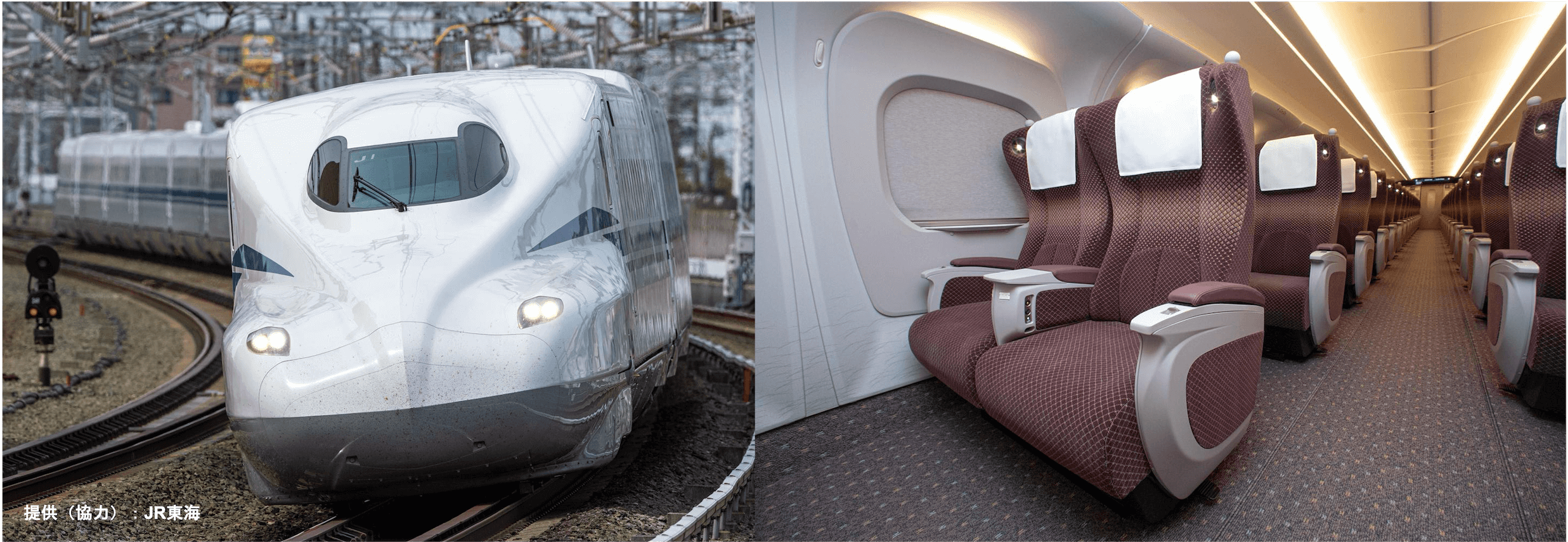
The eco-friendly material “LIMEX Sheet,” developed by GX (Green Transformation) startup TBM Co., Ltd., has been introduced for service information leaflets in all Tokaido Shinkansen Green Cars. This initiative significantly reduces the environmental impact associated with passenger services and transportation.
Results and Social Impact:
High Durability of “LIMEX Sheet” Leads to Full-Scale Adoption
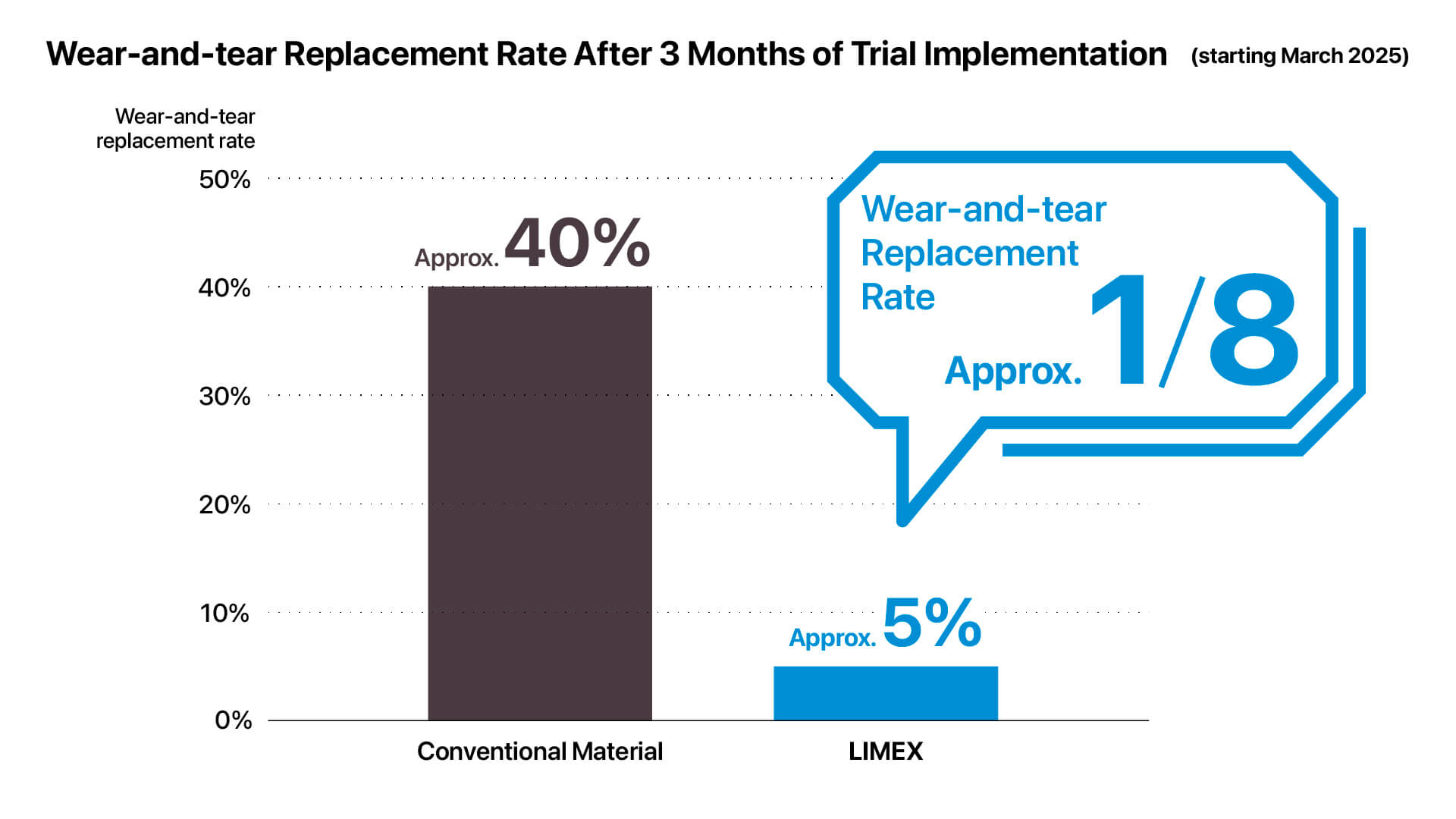
As a result of the pilot project launched in March 2025, the proportion of leaflets that required replacement due to wear and tear from repeated use was approximately 40% for conventional laminated paper leaflets, compared to only about 5% for those made with LIMEX Sheet after three months of use.
This significantly enhanced durability, along with the resulting reduction in replacement frequency and improved operational efficiency for onboard staff, was a key factor in the decision to adopt the material across all Green Car vehicles.
Looking ahead, LIMEX Sheet— which reduces water consumption during manufacturing by approximately 94% and does not use wood pulp as a raw material— is expected to contribute to the conservation of natural resources and decarbonization through its expanded application across a wide range of uses.
Partner Comments
TBM Co., Ltd.:
LIMEX Sheet is an environmentally conscious product that reduces water usage by approximately 94% during production and eliminates the need for wood pulp. Through the ‘Global CityTech Bridge’ trial with JR Central, we were able to confirm not only its environmental performance but also its high durability, which reduces replacement frequency and improves operational efficiency. TBM will leverage the insights gained from this project to further collaborate with JR Central and other leaders in the transport sector to promote LIMEX Sheet and solve environmental challenges in passenger services and infrastructure.
You can find TBM’s press release here.:https://tb-m.com/news/news-4861/
Central Japan Railway Company:
Since the launch of various new Green Car services (mobile ordering, support calls, etc.) in Spring 2025, more passengers have been utilizing our leaflets, leading to gradual wear and tear. We found that frequent replacements were necessary and began searching for an alternative to paper. Through this project, we were introduced to TBM’s LIMEX Sheet. The three-month trial proved its high durability, leading us to decide on a full-scale rollout across all train sets starting this spring. JR Central remains committed to strengthening collaborations through this project to further enhance service levels on the Tokaido Shinkansen.
【 Global CityTech Bridge 】
Aimed at fostering innovation and social implementation of CityTech (urban-related technology). Operated jointly by CIC Institute and Shimizu Corporation, it partners with 18 corporations/municipalities and international entities like Connected Places Catapult (UK) and Anywhere Ventures (USA). The program provides startups with matchmaking, pilot opportunities, financial support, and global expansion assistance.
More Details on Global CityTech Bridge:https://jp.cic.com/tib-catapult/
【 TiB Catapult 】

As part of the Tokyo Metropolitan Government’s goal to become the “world’s most startup-friendly city,” TIB CATAPULT was launched to create “clusters” of business entities and startups to solve global issues.
More Details on TIB CATAPULT (Website of Tokyo Metropolitan Government):
https://tibcatapult.metro.tokyo.lg.jp/
【 CIC Institute 】
The specialized consulting arm of CIC (Cambridge Innovation Center), which operates innovation centers globally. Leveraging expertise in building innovation ecosystems and supporting deep-tech startups, CIC Institute works with governments, universities, and corporations to facilitate global startup growth.
More Details on CIC Institute:https://jp.cic.com/innovation-program/#about-cic-institute
【Contact】
Global CityTech Bridge Committee :Kagami, Enkhtur, Ikemoto ( catapult@cic.com )