
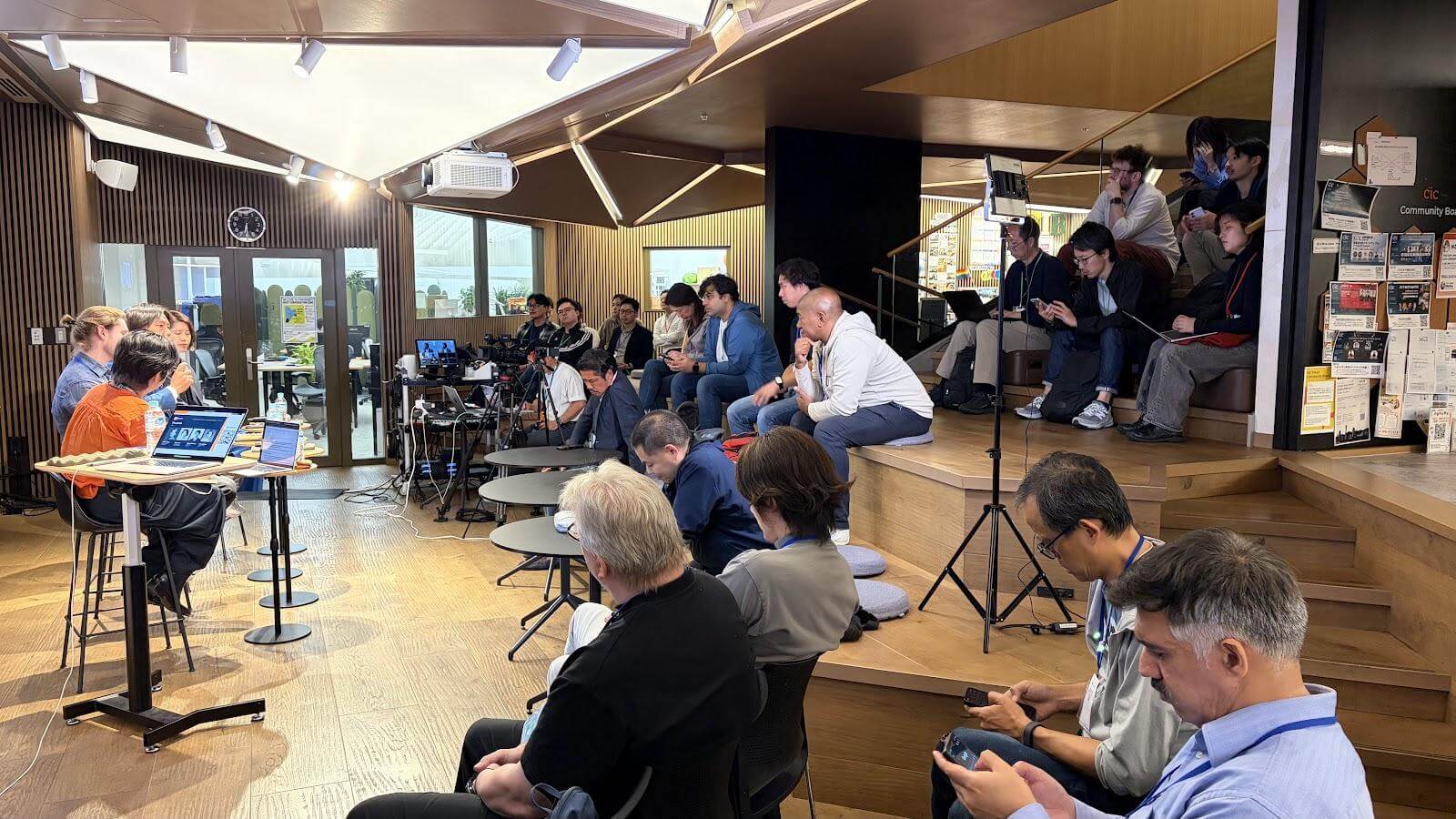
On 15 October, CIC Tokyo hosted the first Physical AI Node Salon, a new series on physical AI as a part of the Global Business Networking Program by Tokyo Metropolitan Government: robots and AI systems that work in the real world. More than 40 founders, engineers, corporate R&D teams, investors, researchers and public-sector guests came, about three quarters of them from outside Japan.
Why a new series? Japan has active physical AI communities in Japanese and in English, but they mostly run in parallel. Moderator Shino Tsuchiya (CIC Catalyst) explained that CIC wants to connect them, because silos between companies, languages and countries slow everyone down.
Shino was joined by Chiamin Lai (FIRSTLIGHT Capital), Kakuya Nishikawa (Kearney) and Stian Jakobsen (O-ID). Here is what stood out.
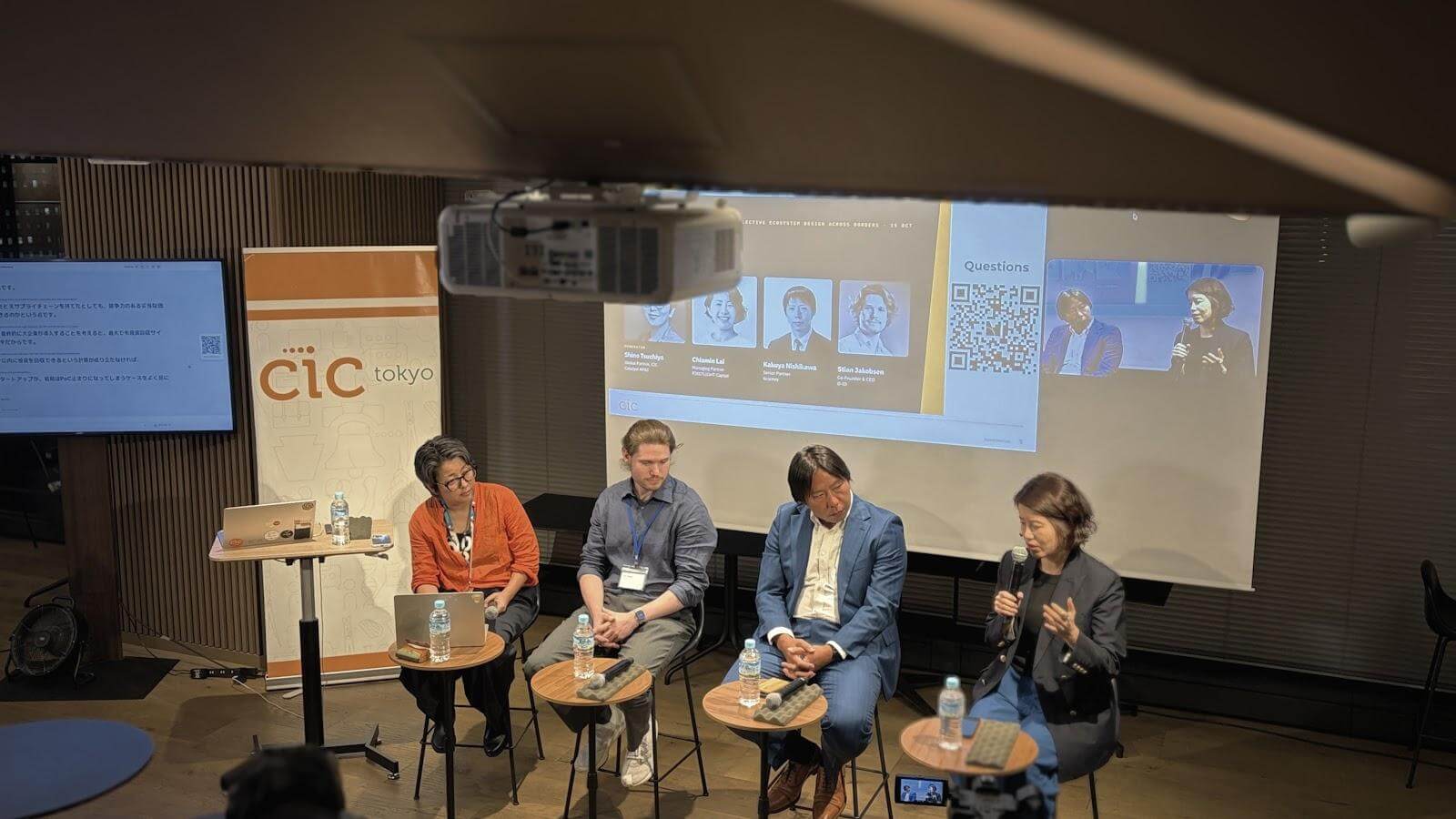
Start with a shared definition. Ask ten people what physical AI is and you get ten answers: digital twins, sensors, robots. Lai said this confusion makes it harder for startups to explain their value to large companies.
Geopolitics is shaping the supply chain. Lai split physical AI into three layers: data, hardware and the “brain”. China leads on hardware and can turn around the production of new parts in about two weeks; the US leads on models. Stian recalled how Norway banned and replaced telecom equipment almost overnight, and expects robotics to go the same way. For robots going into government or critical infrastructure, the question is shifting from “who is cheapest?” to “who are we allowed to buy from?”
Japan has gaps, and an edge. Japan doesn’t have a full robotics supply chain, and it has few large system integrators to run new trials with customers. But Japan’s large base of industrial robot makers and users is seen as a possible advantage in real-world data, especially data on how robots fail.
The business case comes first. Nishikawa has watched several robotics booms come and go; most of the collaborative-robot startups he saw in the late 2010s did not survive. Factories usually expect an investment to pay back within 1.5 to 2.5 years, which is why so many startups get stuck at the POC stage. Lai asked corporates to also weigh the bigger constraint: labour. Japan is short of workers even to build the data centres that AI needs.
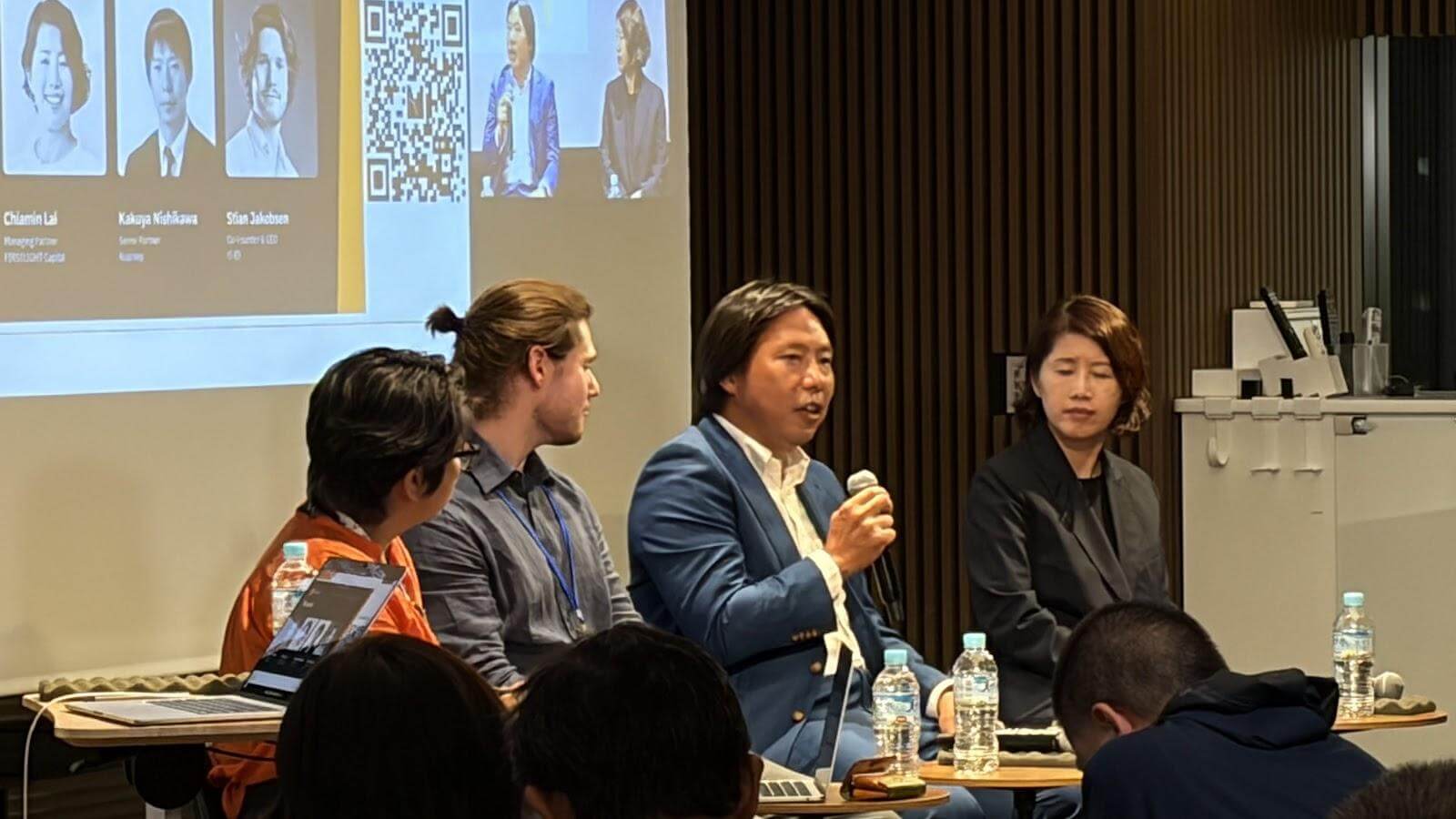
Different buyers value different things. O-ID builds modular humanoid robots, where a broken arm or hand can be swapped out like a car tyre. Jakobsen said US investors care most about the supply chain, Japanese factories about uptime (one robot down on a critical line can cost millions of dollars an hour), and other customers about customising hands and body shapes.
Plan for long sales cycles. Large Japanese companies can take 18 months or more to decide, and your main contact may change every two years, so build relationships across the organisation. Jakobsen’s advice: don’t rely on one customer, assume they aren’t committed until they sign, and treat fundraising as a numbers game. Lai’s request to the corporates in the room: decide faster, and say no early if the answer is no.
After the panel, guests split into three groups: collaboration between startups, working with large corporates, and building the ecosystem. Some of what came up:
Many guests asked to stay involved and help build the community. Thank you to our speakers, group hosts and everyone who joined. Details of Session 2 will be on our Luma page soon.